Understanding Sewer Ejector Pumps in Multi-Unit Properties
Multi-unit properties throughout Los Angeles County face unique sewage challenges that single-family homes typically do not encounter. When bathrooms, kitchens, or laundry facilities are located below the main sewer line, gravity alone cannot move wastewater upward to the municipal system. This is where sewer ejector pumps become essential. Sewer Ejector Pump Installation helps prevent sewage backups, flooding, and property damage in condos, townhomes, and apartment buildings where elevation differences create drainage problems. These pumps automatically collect wastewater in a basin and force it upward and outward to the municipal sewer connection. Located near Scavenger Hunt Walking Tours - Los Angeles Union Station, our downtown Los Angeles service area includes numerous multi-unit residential complexes that depend on reliable ejector pump systems. Understanding how these systems work helps property managers and HOA boards make informed decisions about maintenance and upgrades.
 Los Angeles County multi-unit sewer ejector pump installation services
 HOA Responsibilities and System Ownership
In condominium communities throughout Los Angeles County, the distinction between individual unit responsibility and HOA responsibility directly impacts who pays for sewer ejector pump repairs and replacements. Most HOAs are responsible for common area plumbing infrastructure, which typically includes the main ejector pump system that serves the entire building or complex. We know Los Angeles County's municipal code requirements clearly define these boundaries. However, individual unit owners bear responsibility for fixtures and pipes within their exclusive spaces. This division creates coordination challenges when problems arise. Precision Emergency Plumber Los Angeles serves Los Angeles County residents by helping HOAs understand their legal obligations and maintenance requirements. Property managers must review their CC&Rs (Covenants, Conditions, and Restrictions) to determine exact responsibility assignments. Our team shows up on time to assess whether a problem stems from the common system or individual unit plumbing, then explains the problem clearly so boards can act with confidence.
Landlord and Tenant Obligations in Multi-Unit Rentals
Rental properties with ejector pump systems require clear communication between landlords and tenants about usage and reporting responsibilities. Tenants must report signs of sewage backup or slow drainage immediately. Landlords are legally responsible for maintaining functional plumbing systems, including ejector pumps, since these are essential utilities. Los Angeles County landlords cannot pass maintenance costs to tenants except through explicitly documented lease agreements that comply with state law. Precision Emergency Plumber Los Angeles provides honest assessments that protect landlord investments while confirming tenant safety. We understand https://precisionemergencyplumberlosangeles1.com/ how stressful sewage problems can be for rental occupants, and we work quickly to restore function. Fair pricing on emergency repairs means landlords can respond without excessive financial burden, and transparent invoicing prevents disputes with tenants about repair costs.
Installing Ejector Pumps in Multi-Unit Environments
Installing sewer ejector pumps in multi-unit buildings requires coordinating with property management, affected residents, and often the local water authority. Unlike single-family homes where one homeowner controls access, apartment and condo buildings have dozens of residents whose daily lives depend on functional plumbing. Precision Emergency Plumber Los Angeles coordinates with property managers to schedule work during least-disruptive times, often early morning or evening hours. Our team obtains necessary permits and communicates timelines to residents affected by the work. We conduct thorough site assessments before work begins, identifying potential obstacles and coordinating with building engineers. Property managers appreciate our reliability—we respect building protocols, protect common areas during installation, and complete work on schedule. No hidden fees surprise buildings later; our fixed estimates help property managers budget accurately for capital improvements.
How Multi-Unit Systems Differ from Single-Family Installations
Multi-unit ejector pump systems operate at dramatically higher volumes than residential systems in single homes. A single-family system might process 300-400 gallons daily from one household, while a multi-unit building's ejector pump handles 2,000-5,000 gallons daily from dozens of units. This volume difference requires larger basin capacities, more powerful pump motors rated for continuous duty, and redundancy features like backup pumps. Commercial-grade equipment differs significantly from residential-grade products in durability and performance standards. The International Plumbing Code mandates specific sizing calculations based on the number of plumbing fixtures served. Precision Emergency Plumber Los Angeles provides Sewer Ejector Pump Installation in Los Angeles County using equipment rated for multi-unit applications. Our engineers size pumps correctly based on fixture counts and drainage patterns.
Maintenance Requirements for Multi-Unit Ejector Pump Systems
Preventive maintenance on ejector pump systems protects multi-unit buildings from costly emergency repairs and sewage backups. Monthly inspections verify the pump activates when the basin fills and confirm the float switch operates correctly. Annual cleaning removes debris, grease, and sediment that accumulate in basins despite trap usage. Many multi-unit buildings overlook these maintenance tasks, then face emergency calls costing $2,000-$4,000 for immediate repairs. Los Angeles County homeowners in multi-unit settings should encourage their HOAs to establish maintenance schedules. Precision Emergency Plumber Los Angeles backs every installation with 5-star Google reviews from property managers and residents who appreciate reliable systems. We offer annual maintenance contracts that prevent emergencies through routine inspections and cleaning. Property managers who invest in maintenance spend less overall than those who wait for failure. Our technicians document every service visit, providing HOAs with records demonstrating system health and compliance with municipal regulations governing sanitary sewer connections.
Permit Requirements and Code Compliance
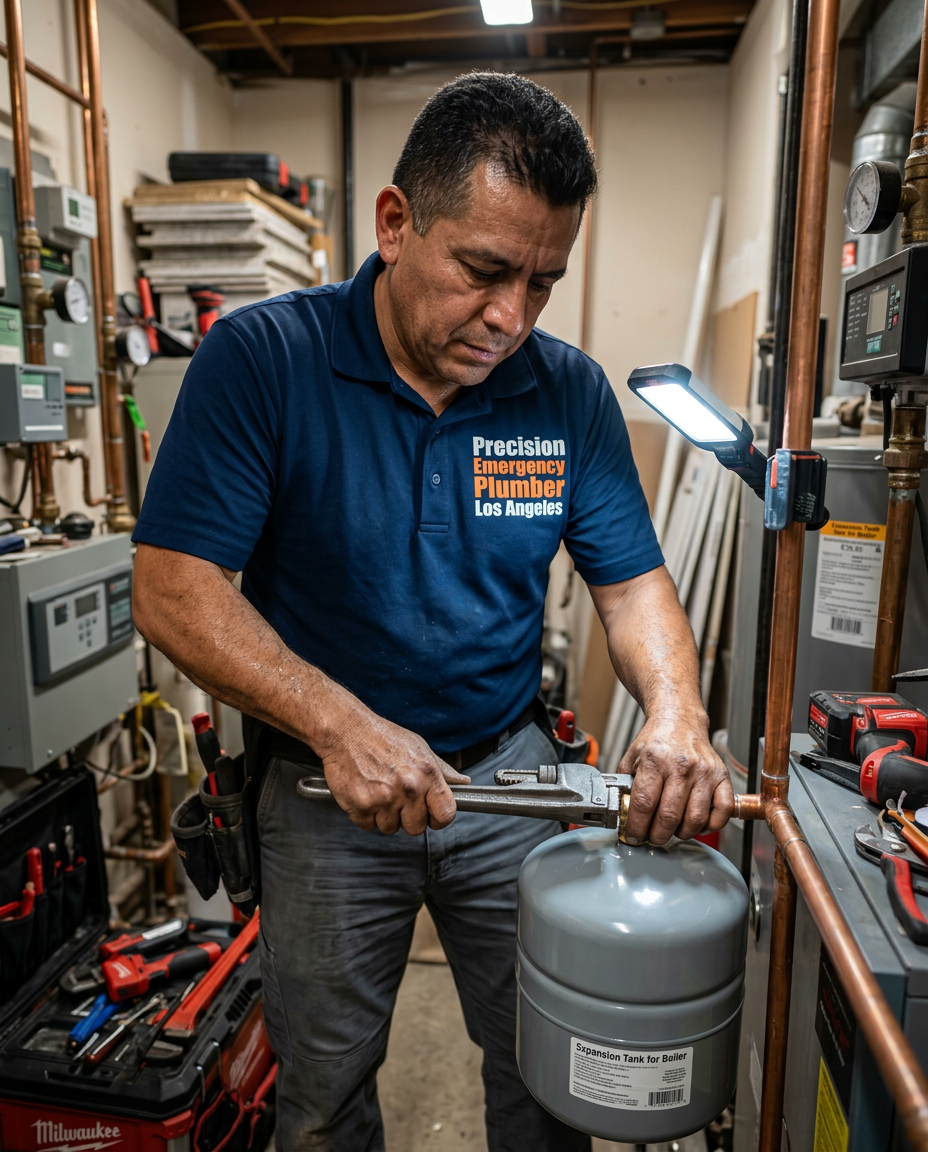
Los Angeles County requires building permits for sewer ejector pump installation, with specific inspection requirements before and after completion. Multi-unit buildings must also comply with Title 24 energy standards and local building codes more strictly than single-family homes. The Uniform Plumbing Code mandates backflow prevention devices on all potable water connections and specific clearances around pump basins. We handle permit acquisition, scheduling inspections, and confirming installations meet every code requirement. Our licensed, bonded, and insured technicians know Los Angeles County's specific enforcement standards and work with local inspectors smoothly. Buildings avoiding proper permits face fines and difficulty selling or refinancing properties. Regarding expansion tanks for boiler systems, a new expansion tank typically costs between $300-$800 for the tank itself, plus $200-$400 for professional installation, depending on tank size and system complexity. Contact us at 412 Colyton St, Los Angeles, CA 90013, or call (213) 451-6567 for consultation on your multi-unit property's ejector pump needs.
Precision Emergency Plumber Los Angeles
412 Colyton St, Los Angeles, CA 90013
(213) 451-6567